
Reflecting on the Legendary Career of Norristown Attorney, Ronald Sherr

“For over 30 years I’ve been amazed at the number of lawyers who ask if Ron Sherr is my father and proceed to praise him as a Norristown legend. My father is universally respected and liked. The relationships he has built with opponents, competitors, and the bench are (in my opinion) unrivaled. His success as a mediator demonstrates what I’ve always known about my father – that he has a profound sense of integrity, fairness, and commitment to his community. 60 years practicing law, 60 years of marriage to my mother, Linda, and 59 years as a dedicated father, mentor, and friend.”
– Anthony R. Sherr, Ron’s Son, Managing Partner, Sherr Law Group
The Right Start to an Impactful Career
Ronald Sherr launched his legal career at the ripe age of 28. Having just graduated from Temple Law School in 1956, Ron joined both the Pennsylvania and the Montgomery County Bar Associations and began formally practicing law in 1957. To give readers some perspective on the cultural climate of 1957, here are a few noteworthy events:
- Dwight D. Eisenhower was inaugurated into his second term as president
- The FBI arrested Jimmy Hoffa for bribery
- Ford Motor Company introduced the Edsel
- The U.S. Military sustained its first combat fatality in Vietnam
- Elvis Presley performed live at the Philadelphia, PA, Sports Arena, and later that year, was drafted into military service
- Philadelphia Phillies finished 5th in the National League
- Wham-O launched the Frisbee
- Gun Smoke was the #1 show in television
- Future astronaut John Glenn sets the transcontinental speed record
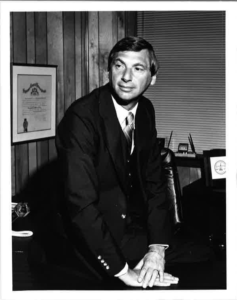
As a newly minted lawyer, Ron began his practice trying two or three fender-bender cases per day, each worth a few hundred dollars. “I really wanted to move into litigation, but it was hard,” said Ron. Adding, “Generally, lawyers start with the district or county attorney’s office to get valuable litigation experience.” The high volume of fender-bender cases Ron tried in court sparked a lifelong passion for litigation. Within a few years of launching his practice, young Ronald Sherr became a full-blown trial lawyer. Ron, a self-described “shy, retiring guy” realized that every successful lawyer needed a constant stream of new business. Ron remembers declaring, “If I wanted to make money and raise my family right, I needed to get out there and HUSTLE!”
In 1971, Ron made a decision that ultimately shaped the course of his entire career. He moved his small practice to the quaint, blue-collar city of Norristown, PA – located in Montgomery County. While working as a trial lawyer, Ron developed a reputation as a gifted litigator, which meant his cases began escalating from minor car accidents to more complex insurance and banking matters. Although Ron encountered tremendous success after moving to Norristown, he realized his practice needed to evolve if he were to achieve long-term growth. “I needed to transfer skills into other areas of law, so I hired attorneys who were capable in other fields including corporate and estate planning,” said Ron. For Ron, bringing in new team members was a win-win situation: “I hired talented lateral attorneys who brought business to the firm, and I paid them on what they delivered.” Along with diversifying his team, Ron also identified networking as a crucial element for his future success. According to Ron, joining his local country club and becoming its president was a strategic accomplishment: “I met a lot of new friends, many of whom owned businesses.”
Taking His Practice to the Next Level
By 1980, Ron had the largest law firm in Norristown –with over 33 lawyers practicing corporate law and litigation for consumers, businesses, and insurance companies. It was during this time that Ron really got serious about his insurance defense practice.
As Ron recalls, “Back in the day, most of the major insurance companies were headquartered in Philly. I used to wander down to their offices at 4th and Walnut, to informally meet with the adjusters I knew. At the time, I would even go twice per day.” Ron credits this tenacity as the foundation for myriad fruitful networking relationships.
Since the big insurance companies were just down the street (and he had daily personal access to the adjusters), Ron landed numerous insurance company clients. Ron recollects, “These cases were my bread and butter. I was in court all the time trying cases. Insurance people would see me in court and seek me out because of my insurance defense reputation.”
In Montgomery County, Ron would have lunch or dinner in the bar association dining room, where he would meet referral sources and build what eventually became strong and enduring relationships. According to Ron, “You just can’t do that anymore.” Aside from the antiquated notion of a “bar association dining room,” Ron also laments, “I’m just not seeing that type of civility or comradery in the practice of law today.” In the eyes of Ronald Sherr, successful networking was integral to the success of his practice.
The Power of Personal Connections
Ron attributes one facet of his success to a “One-to-Many” strategy, which meant he could develop a relationship with one bank or an insurance company and generate many cases (as opposed to marketing one client at a time).
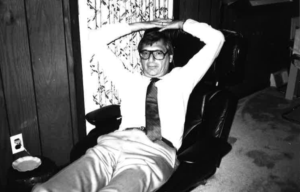
Throughout his career, Ron continued the habit of meeting at the bar association dining room, where he would informally chat with judges and other lawyers. Ron had a formidable reputation among lawyers in Philadelphia. “I was known as the go-to guy because I knew all the judges, which just doesn’t happen today,” Ron added. These relationships gave Ron a competitive advantage, and in many cases, he could secure early hearings for his clients. Ron’s reputation continued to grow, in part, because of his relationships with judges, lawyers, and others in the legal system in and around Montgomery County.
“It was a different time and place.” Ron lamented, “I used to play golf and wine and dine the judges, which you can’t do now.” Ron knows these relationships provided him with a distinct advantage over other lawyers, and acknowledges how fun it was to meet and build strong relationships with them.
Huge Growth for the Biggest “Small Firm” in Town
In the 90s, Ron began buying other practices. As Ron notes, “I’d see a team with a solid practice with good clients, and I would hire them.” When his firm grew to a certain level, the inevitable discussions about how to split the pie were surfacing regularly. “I decided at the time that a merger was the best solution for the practice,” said Ron.
During this time, Ron was also able to convince a lot of wealthy clients NOT to work with big Philadelphia-based firms. He stressed the benefit of having the experience of a big firm, with less overhead, which meant clients received lower hourly rates. “My message was that our firm was the “biggest small firm” in town,” he added.
In 1991, The Philadelphia County Court system found itself in crisis — they had a backlog of over 26,000 cases. Though unimaginable, some cases weren’t getting tried for 5-7 years. As a direct result of his personal connections and stellar reputation, Ron, with other court administrators and defense lawyers, was made a judge pro tem: an attorney who is temporarily appointed to serve as a judge. Ron gained the unique experience of presiding over countless jury and non-jury trials. As Ron recalls, “In Montgomery County, I talked to one of the senior justices at the time and devised a system where 5 senior attorneys worked pro bono to hear discovery disputes every Friday. Attorneys would appear before a senior attorney for a hearing. While we didn’t make the final decisions, we made recommendations to the judge, which, in most cases, were accepted.” This process is still around today and is viewed as one of the best systems around to expeditiously move cases through the system.
Today, Ron still holds a position in commerce court in Philadelphia, which only handles business cases. Additionally, Ron has the honor of serving as a Fellow in the American College of Trial Lawyers, a distinction held by a small percentage of lawyers across the country. Membership is limited to those trial lawyers who are “unquestionably and eminently qualified, in addition to being regarded as the best in their state.” Being part of this organization has been a great point of pride for Ron over the years.
The Importance of a Strong Support Team
Realizing he couldn’t possibly do everything necessary to run his firm, Ron hired IT, facilities, and an office management staff. “I hired who I needed to take care of the tasks I shouldn’t have been doing anyway, which removed me from the ongoing burden and many times annoyance of running the business,” said Ron.
Ron hired an executive assistant who took care of personal as well as work obligations. This position eventually evolved into an office manager. “My executive assistant/office manager was involved in everything related to running the practice. I was then able to focus all my time on generating new business and serving clients of the firm. “I never had to worry about things like human resources, or facilities management,” said Ron. “Rather, I had to focus on getting things out of my way that held me back,” he added.
Age 88 and Still Hustling
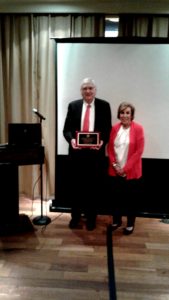
When asked what Ron does when not working, he says, “I’ve transitioned. I really enjoy serving as a mediator and arbitrator. I also call on my old friends at insurance companies – and offer to do mediation and arbitration,” he mentioned. Ron also enjoys helping his son, attorney Tony Sherr, with his cases. That said, because of changes in the insurance industry, the bulk of Tony’s practice today is national. In terms of other free time, “I can’t really golf anymore, but I do play cards, mainly bridge (a lost art). I used to be very involved in charitable organizations – and still do a little of that,” said Ron. In our conversation, Ron glows when he discusses his eight grandchildren: “I love spending time with my grandchildren, and have always been really involved with my kids and my grandchildren.” Ron’s recent advice to his granddaughter says it all: “Go to law school – it’s a fine and regal profession. It is part of the American fabric to preserve and protect people.” Great words of advice from a lawyer who defines the regal practice of law.
Ronald Sherr: A Norristown Legacy
At the core of Norristown, PA (the seat of Montgomery County), is the Montgomery County Courthouse. When Ron’s career first began in 1957, “lawyers used to be in Norristown so they would have ready access to the courthouse.” Now however, “they’re all over the place.” In 2016, Ron’s succession plan and son, Tony, purchased a building in downtown Norristown, the current home of the Sherr Law Group. Ronald Sherr is a living Norristown legend whose name elicits smiles, fond stories, and a legacy of the highest ethics and integrity.
Ron has no intentions of retiring and spends his full time in participating with Tony in the handling of Tony’s cases.
You can contact Sherr Law Group for more information about our Effective Litigation Solutions .